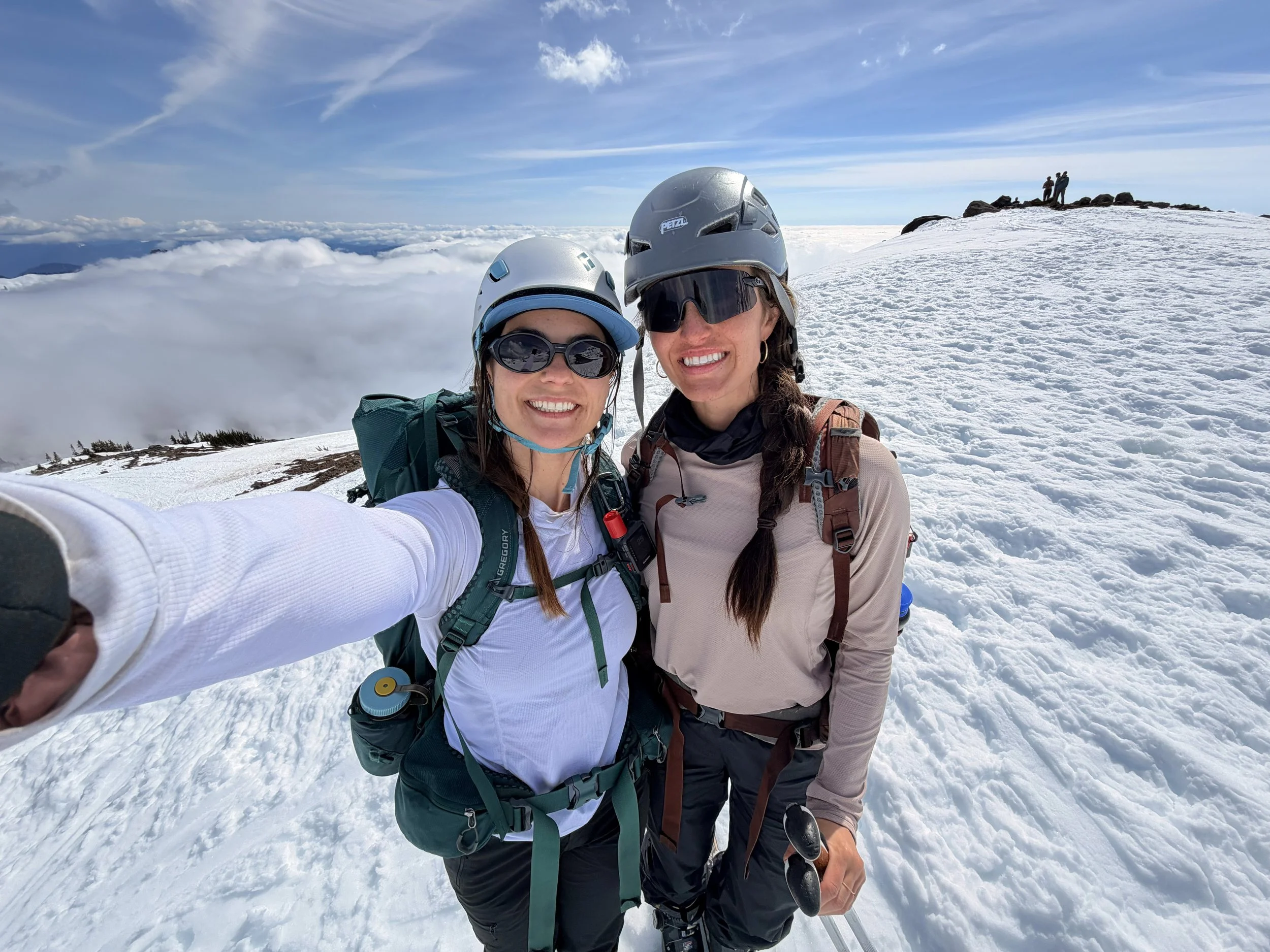
Diamox & POTS + a ski tour at Mount Rainier
5.22.26
I've always believed that everything happens for a reason.
Not necessarily because every setback is part of some grand plan, or because every difficult experience immediately reveals its purpose. More often than not, the reason only becomes clear when I look back later and connect the dots.
Over the years, I've had enough experiences in the mountains—and in life—to know that sometimes the things we desperately wanted to happen don't work out for a reason we can't see in the moment. A missed opportunity leads to a better one. A closed door redirects us somewhere we were supposed to be all along.
We had plans to climb Mount Rainier. A major spring storm had swept through the mountain just days before, and it had been nearly a week of zero summits for everyone…including the guide services. Still, the forecast was improving, temperatures were stabilizing, and we were hopeful that conditions would come together.
We bought our climbing permits, packed all the essential gear we would need for a summit attempt, and started preparing for the climb. Part of our team headed up to Camp Muir the night before to acclimate while we planned to head up the following morning.
Around the same time, I made the decision to try Diamox for the first time.
I've always struggled with a pretty nasty altitude cough on bigger mountains, presumably pulmonary edema, and after hearing so many climbers talk about preemptively taking Diamox, I figured it might be worth trying. For those unfamiliar with it, Diamox (acetazolamide) is commonly prescribed to help prevent altitude sickness. It works by causing your body to excrete bicarbonate through your kidneys, which makes your blood slightly more acidic. In response, your body breathes deeper and faster, helping improve oxygenation and acclimatization at altitude.
What I didn't fully appreciate before taking it is that Diamox is also a diuretic.
A pretty effective one.
That means it causes your body to get rid of more fluid, which is why increased urination is one of the most common side effects. As someone with POTS, hydration is already one of the most important tools I have for managing symptoms. When my fluid volume drops, things can go downhill pretty quickly. Looking back, this should have been a much bigger consideration before introducing a medication designed to remove fluid from my body. But my mind was completely scrambled making sure I had all of the appropriate gear for the climb since it was all planned last minute (like literally two days prior).
The morning of our climb, we stopped at Whittaker Mountaineering to grab a few last-minute supplies and talk with the RMI team about current mountain conditions. The helpful RMI staff made it clear that Rainier still wasn't ready, and wouldn’t be for a couple more days. The recent storm had done enough damage to existing routes that there still wasn't a viable path to the summit, and they didn't expect successful climbs for at least a couple more days.
Normally that would have been a disappointing end to the story.
Fortunately, before leaving Seattle that morning, we had made a last-minute decision to throw our touring skis into the car just in case. Instead of attempting Rainier, we decided we'd skin up toward Camp Muir and ski back down.
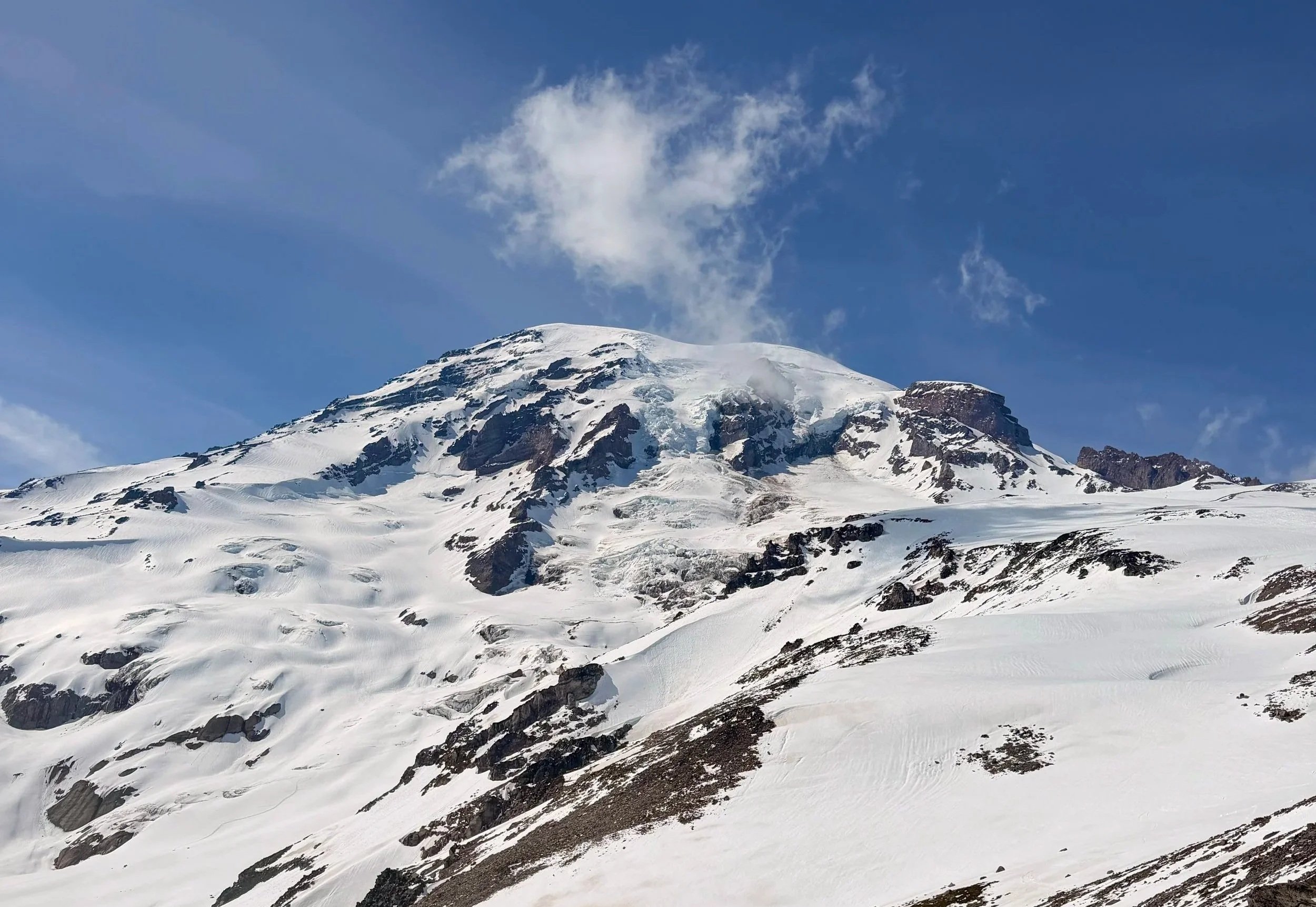
We had literally done the exact same objective two weeks earlier and had an absolute blast so we wanted to get the most out of the day since we were already in the area.
This time felt different almost immediately.
Within the first three-quarters of a mile I was already feeling unusually weak. I was short of breath, lightheaded, and struggling far more than I should have been for the effort level. At first I tried to ignore it. After all, we had literally done this exact route two weeks prior and it was a breeze. I knew I was physically capable of it. I assumed maybe I just needed to warm up or settle into a rhythm.
When I told my touring partner, Haley, how I was feeling, we stopped to eat, hydrate, and reassess. We continued upward, but at a more steady pace and with far more breaks than normal.
The problem was that every time I started moving again, the symptoms came right back. The higher we climbed, the worse I felt.
My heart was racing. I felt weak and shaky. My teeth were buzzing. I was getting increasingly dizzy and eventually started experiencing tunnel vision. No amount of resting seemed to fully resolve it. I was also going through water much faster than expected.
At roughly 8,550 feet—about 1,500 vertical feet below Camp Muir—I finally made the decision to stop. Honestly, it was a difficult choice.
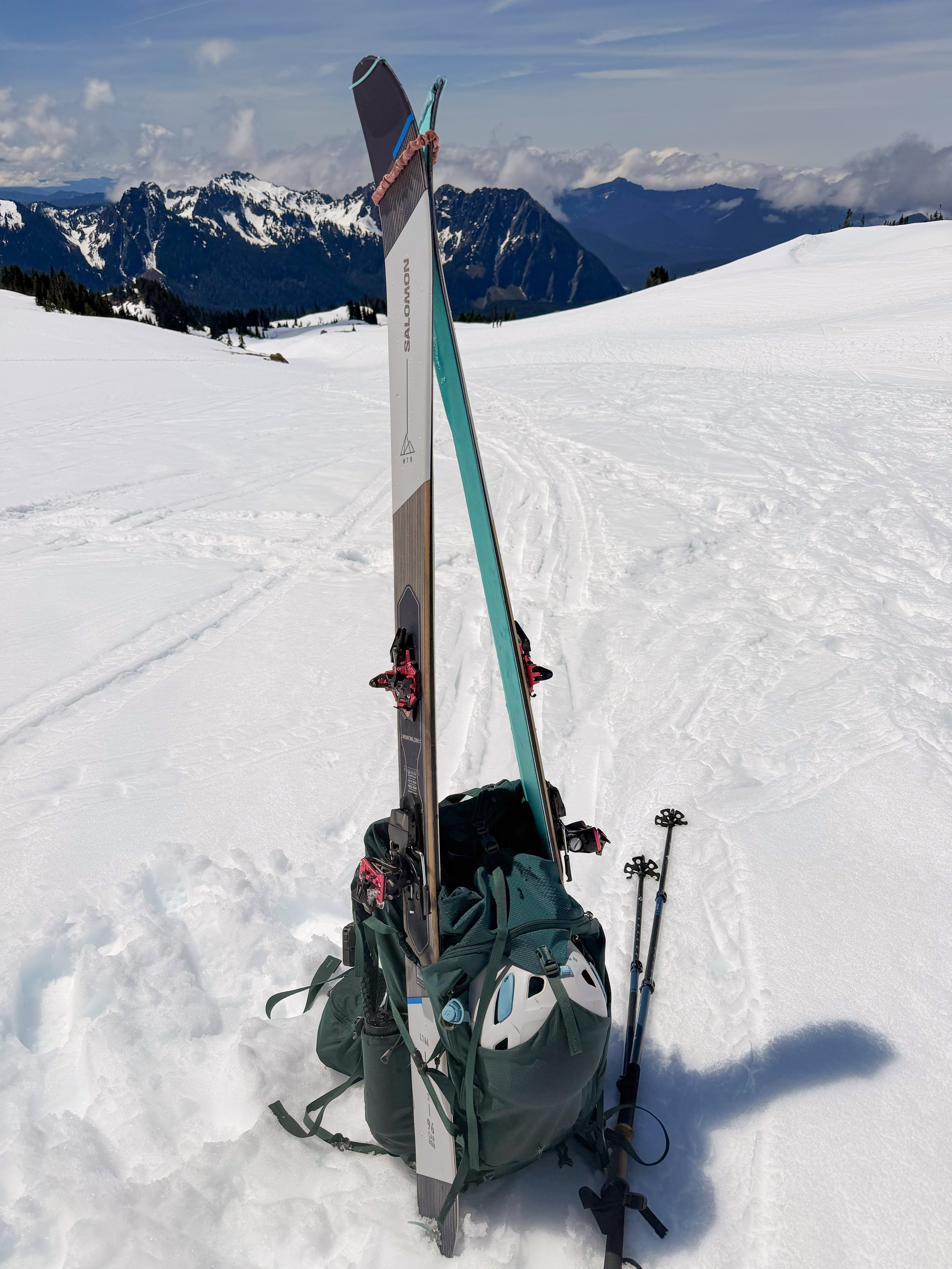
I hate feeling limited by my body. I haven't experienced POTS symptoms this aggressively in years, and every part of me wanted to keep pushing. But there comes a point where continuing stops being determination and starts becoming poor judgment.
I wasn't having fun anymore. I wasn't moving efficiently. I wasn't getting better with breaks. And I knew that if I kept going, I was potentially putting both myself and my partner in a situation neither of us wanted to be in.
So I sat down in the snow, took off my pack, and focused on eating and drinking despite feeling nauseous and having absolutely no desire to do either.
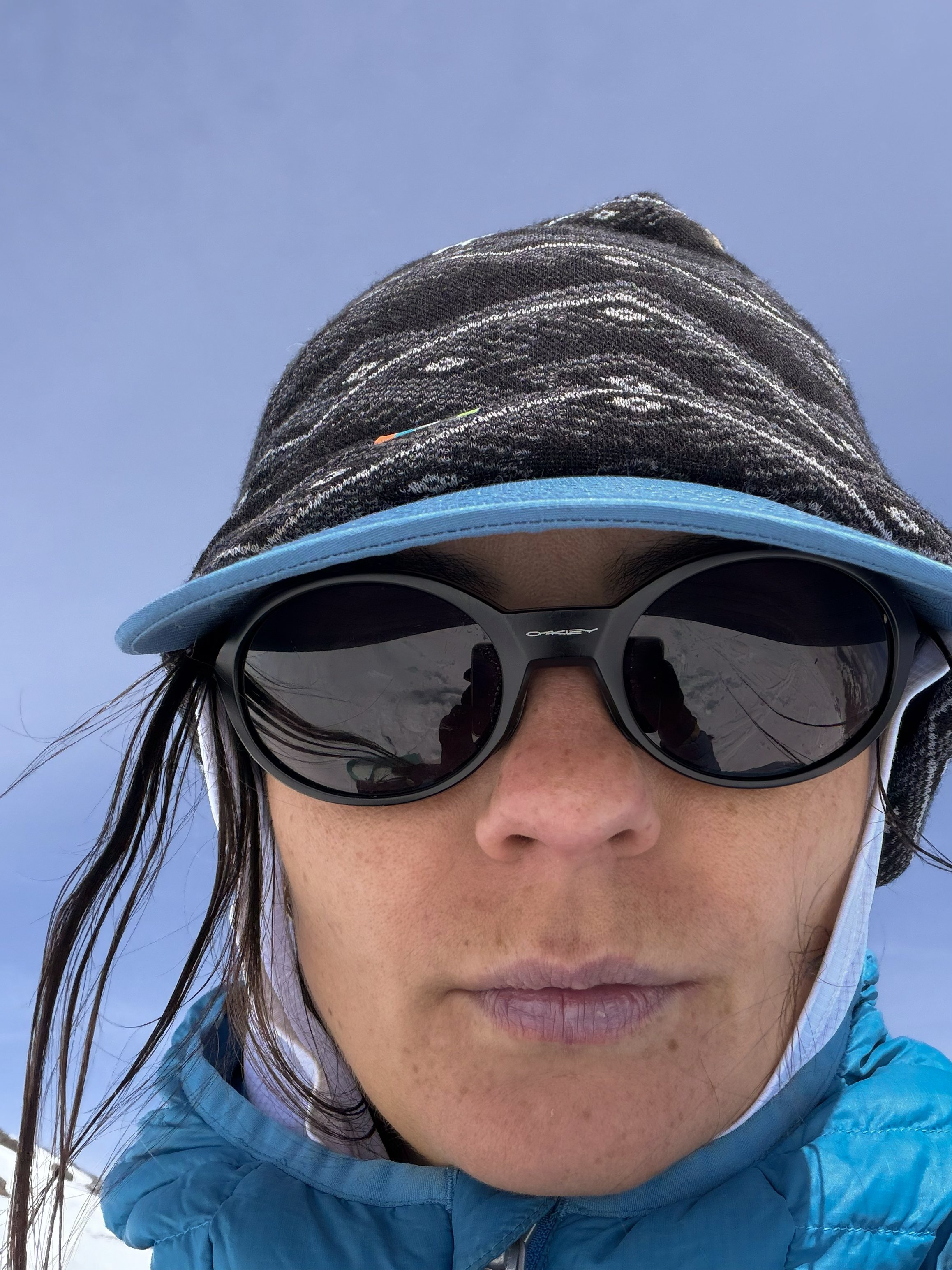
My partner continued a little farther while I rested. About thirty minutes later she skied back down and immediately looked at me and asked, “Do my lips look blue?”
I immediately knew why she was asking. I told her, “no,” then followed up with, “why… do mine?”
She laughed and said, “yes - you kind of look like those people who take selfies on Everest.”
Yup. I told her, “that makes total sense because that’s exactly how I feel right now.”
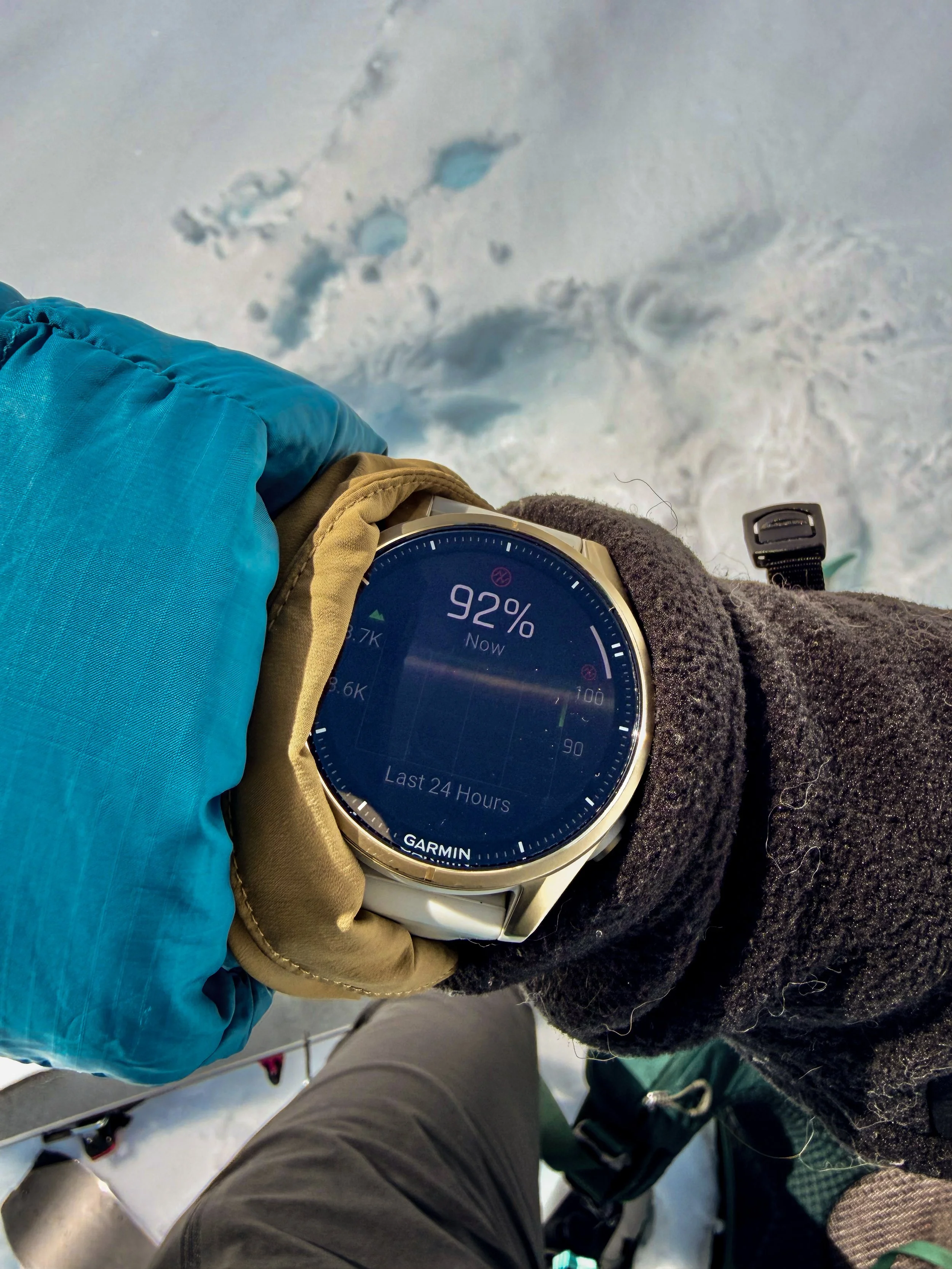
Out of curiosity, I checked my oxygen saturation on my Garmin watch. It read 92%. Not terrible, but certainly not ideal considering I'd already been resting for half an hour. It may very well have been lower before I stopped.
We took a few more minutes and then I started ripping the skins off my skis and getting everything back in my bag. We clicked into our skis and started descending. Every thousand feet we lost seemed to bring a little more energy back. The dizziness improved. The tunnel vision disappeared. My breathing felt easier.
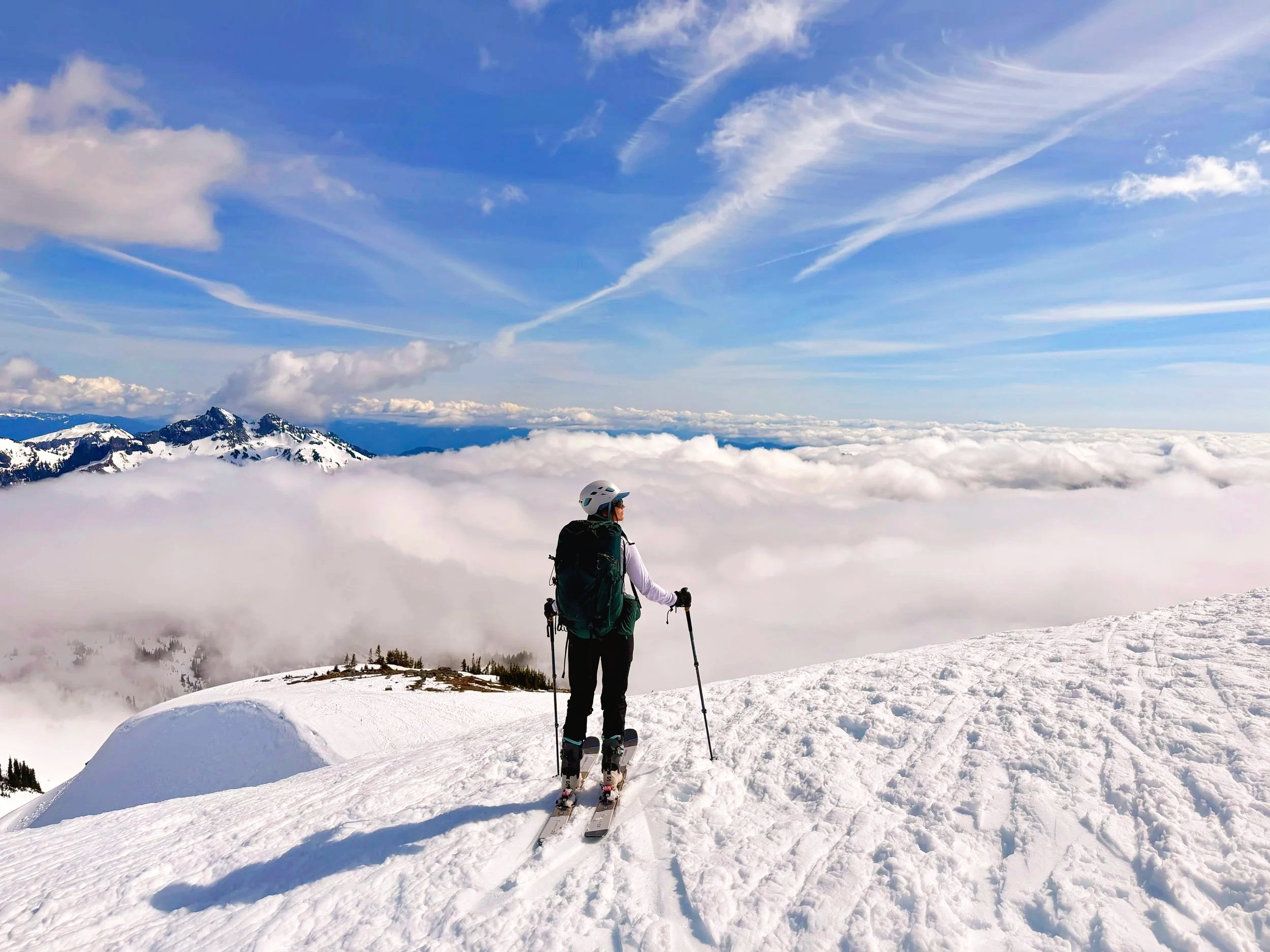
By the time we reached the parking lot, my throat was so dry it felt like I had been walking through a desert. Luckily I had a ton of extra water in the car, and immediaely began chugging it. You know the feeling when you’re so thirsty you can’t stop your body from inhaling the whole water bottle? Yeah, that was me.
The entire drive home, I kept thinking about how differently that day could have gone.
Imagine if there had been a viable route on Rainier.
Imagine if the guides had told us conditions were good.
Imagine if we had started climbing with the summit in mind, instead of simply skiing toward Camp Muir.
I would have gone. Without hesitation. I would’ve forced myself to keep pushing. And based on how I felt before even reaching 9,000 feet, I don't think that day would have ended well.
Instead, a storm rolled through the mountain. Routes were destroyed. Summit plans were canceled. We changed objectives at the last minute.
Looking back, I can't help but think everything happened exactly the way it was supposed to.
The experience taught me several important lessons. First, I need to hydrate far more aggressively if I ever use Diamox again. Second, medications that work well for most people can affect everyone differently, especially when other medical conditions are involved. And finally, mountains have a funny way of teaching us lessons before the consequences become much bigger.
That's a lesson I'll carry with me on every big objective moving forward.
Everything does happen for a reason.
Sometimes that reason is obvious right away. Sometimes it takes weeks, months, or even years to understand. And sometimes the reason is simply that a different path was waiting for us, one that teaches us something we needed to learn before taking the next step forward.